Biography
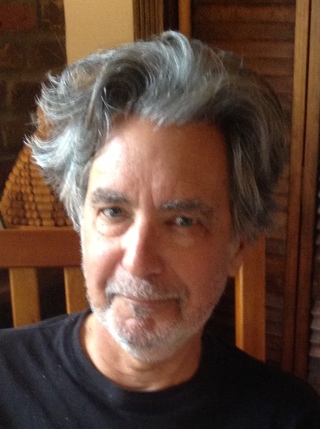
Reading and travel — twin vectors of escape — have formed me as a writer by exciting a love of strangeness and an impatience with exclusive concepts (adult/child, male/female, human/animal) and proprietary domains (realism/fantasy, serious fiction/genre fiction). I have always written to readers as a reader.
My first book, the novel The Crimson Bears, grew out a bedtime story I was telling my son Paul. It is rooted in my love of foreign cities and of animal stories, to both of which I was introduced very young by my father. He took me to Europe for three years when I was two, in 1949, and his farm in Rhode Island offered me a pool full of frogs and a library full of illustrated books. When at nine, after his death, I was sent to boarding school in Switzerland, fear and loss sharpened my thinking about adaptation to difference, a theme that pervades two recent texts, my novel Zuntig, the most recent of my books to appear in print, and 2 Chameleons. This text is a memoir of a year (1997-8) spent in Chefchaouen and Essaouira, Morocco, with my wife, the writer Wendy Walker and juxtaposes the trajectory of our experience in a foreign world with the lives (and deaths) of two chameleons given into our care — the realest animal story I have ever written.
Books supported me through the tedium of boarding school and vacations at home, where I went directly from playing with cars and trucks to writing extended stories that grew out of a fantasy landscapes sculpted in a sandpile. Reading and writing became the center of my life at Harvard College, where I studied English and wrote for THE HARVARD LAMPOON. At Princeton, where I took a doctorate in English, I discovered medieval English and French literature and turned to these texts to renew them. Fascinated by allegory, I tried to catch the equivocal sexiness of Old French fabliaux and beast-fables in my collection of tales, Terror of Earth.
At the same time that I was reading the poems of Rumi, a master-class in poetic drama, offered by the playwright and performance artist Fiona Templeton, inspired the first piece, “Wood Well,” of what became a full-length play, Night & Silence, my version of Shakespeare’s comedy A Midsummer Night’s Dream. This text deploys singing, instrumental music, puppetry, dance, projections onto steam, as well as dialogue, to dramatize the tension between an author (Bottom) who uses language and dramaturgy as weapons to command the text and the forces (forest and fairies) who escape his structures and lead him to “the poem behind the poem.”
I wasn’t able to finish Night & Silence till the year in Morocco, when I took a leave of absence from my career as a teacher of literature and grammar (I am the co-author of Usage, a workbook on English usage), a career that has both fed my work by keeping me in touch with fundamental questions about reading and writing and thwarted it by claiming my time and attention. Listening to how people speak to one another in Morocco, where speech is functional within a dialogue, I matched my experience to what I had been reading in the works of Bakhtin and was able to imagine a dialogic speech that resolved the play. An invitation that same year to lecture on the current state of fiction in the U.S. at the University of La Laguna in Tenerife, Canary Islands, gave me an occasion for thinking about fiction-writing in a focused way; the result was an essay, “Readerly Writing.”
The Moroccan landscape, physical and cultural, impressed itself so strongly on my imagination that it has remained my principal “world.” It informs both a libretto Talking to the Earthquake, and the The Enchantments, a series of novels I have just completed, whose first volume, The Broken House, had just been published. Wendy and I have traveled in Mexico – the Yucatán, Oaxaca, the Bajío – with a view to settling there for at least part of the year. The cold part. The place we wound up, for five winters, was actually Antigua, Guatemala. Now we’re in Brooklyn, with trips here and there, and we're meeting new people all the time; so the world is growing larger, finally.